Commercial Asphalt Milling Services
Libs Paving’s asphalt milling crews remove failing surfaces and correct grades so your new pavement stands the test of time.

Most pavement that gets paved over without proper milling fails again within a season. Libs Paving’s commercial asphalt milling removes the deteriorated or incorrectly graded surface layer before any new pavement is applied, giving the new overlay a clean, stable base that actually holds. The milling and paving crew evaluates drainage pitch and elevation at every project to make sure the milled surface drains and performs correctly after new asphalt goes down. That’s the difference between pavement that holds and pavement that needs redoing.
Pavement milling isn’t just surface removal. The grade achieved during milling determines where water goes and how long the new surface lasts. We set the correct pitch and elevation during every milling pass so your existing drainage problems don’t transfer to the new surface above.
Our asphalt grinding process prioritizes recycling. Milled material becomes reclaimed asphalt pavement, a reusable aggregate that we put back into road base and other paving applications. That means your old surface gets removed and a new resource gets generated in the same pass.
Each of our commercial asphalt milling projects follows a consistent, precision-focused process from initial site evaluation through final surface preparation for new asphalt.
Before any milling begins, our team assesses your existing surface to determine the correct milling depth, grade adjustments, and drainage pitch needed to make the base ready for new asphalt. This prevents under or over-milling that would compromise the new overlay.
Using top-grade milling equipment, we grind down your existing asphalt at the assessed depth in precise, controlled passes. Our crew integrates the milled surface with surrounding edges like curbs, loading docks, and concrete transitions to eliminate lips and level changes at the perimeter.
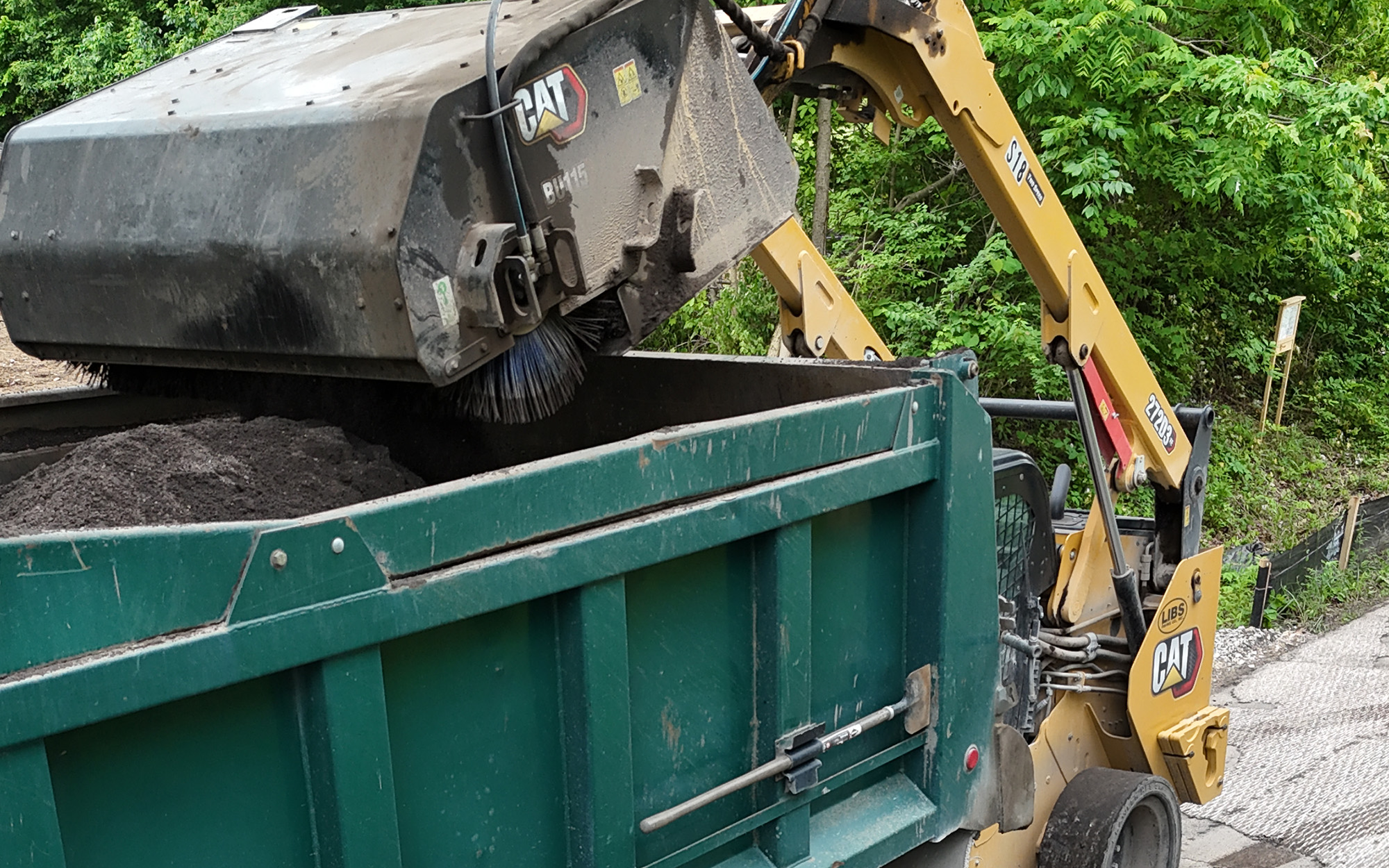
After milling, we sweep and blow the surface clean to remove all millings and loose material. A clean milled surface is essential for proper tack coat adhesion, which bonds the new asphalt overlay securely to the milled base and makes the repair hold.
We handle standalone asphalt milling for commercial sites that need grade correction or ADA elevation adjustments without a full resurfacing scope. You get the drainage or grade problem fixed on your schedule, without being locked into a combined mill-and-pave contract.
Yes, we can handle milling-only projects where the goal is grade correction or drainage improvement before a separate paving engagement. Not every milling job requires the same contractor to also apply the new asphalt, though we can handle both.
Milling depth depends on the project scope. Shallow milling removes 1 to 2 inches for surface-level corrections. Deeper passes of 3 to 4 inches or more are used when base issues, ADA corrections, or significant grade changes are needed. Our team determines the correct depth during the site assessment.
Most commercial milling projects can be phased so portions of the lot or road remain accessible. Full closure is sometimes necessary for larger continuous mill-and-pave operations, but our crew schedules around your property’s operational needs wherever possible.
Commercial asphalt milling at Libs Paving reaches every community around a 50-mile radius of our Southern Indiana plant, including Greater Louisville, New Albany, Jeffersonville, Clarksville, Sellersburg, and the broader Kentuckiana region.
"*" indicates required fields